NGAD
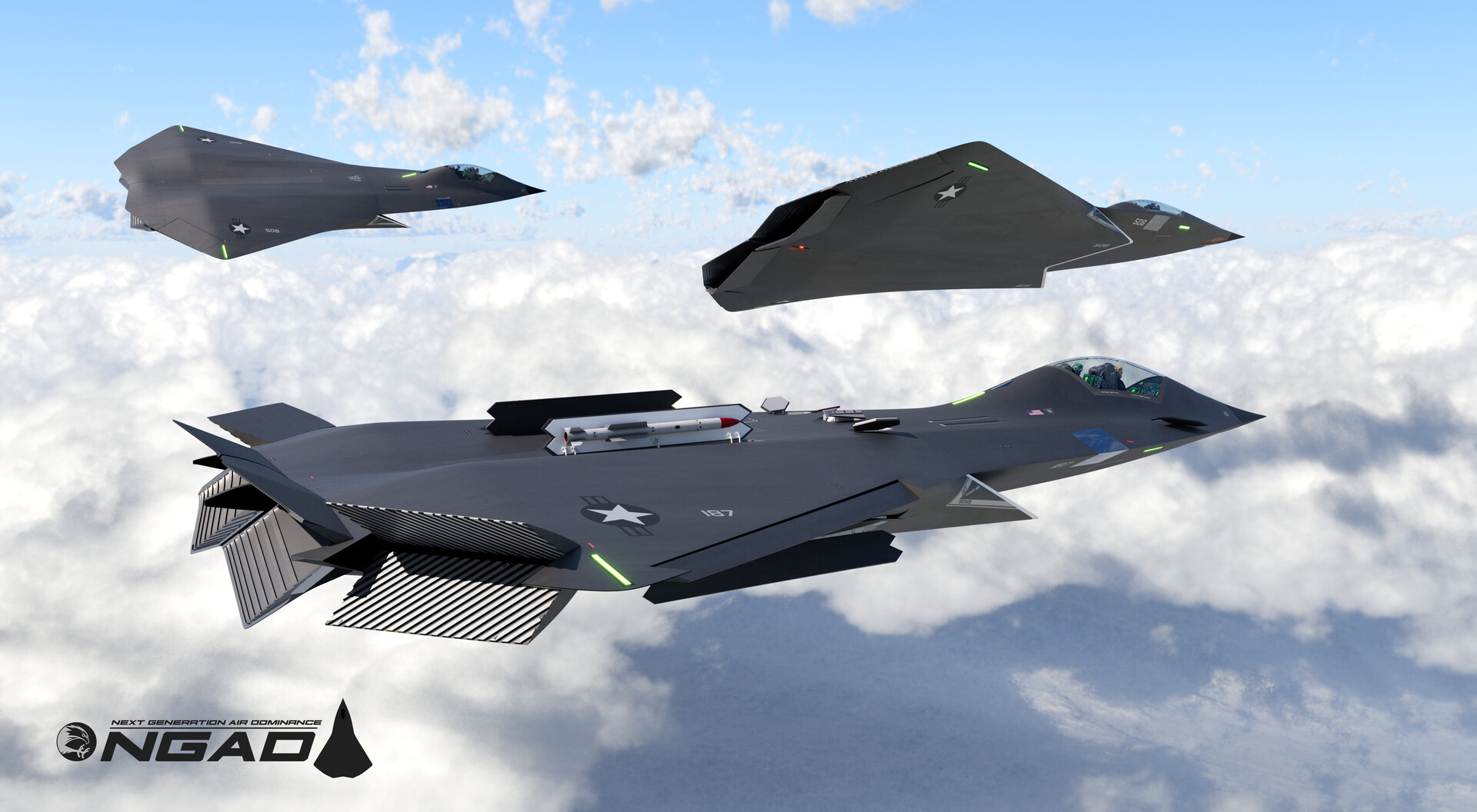
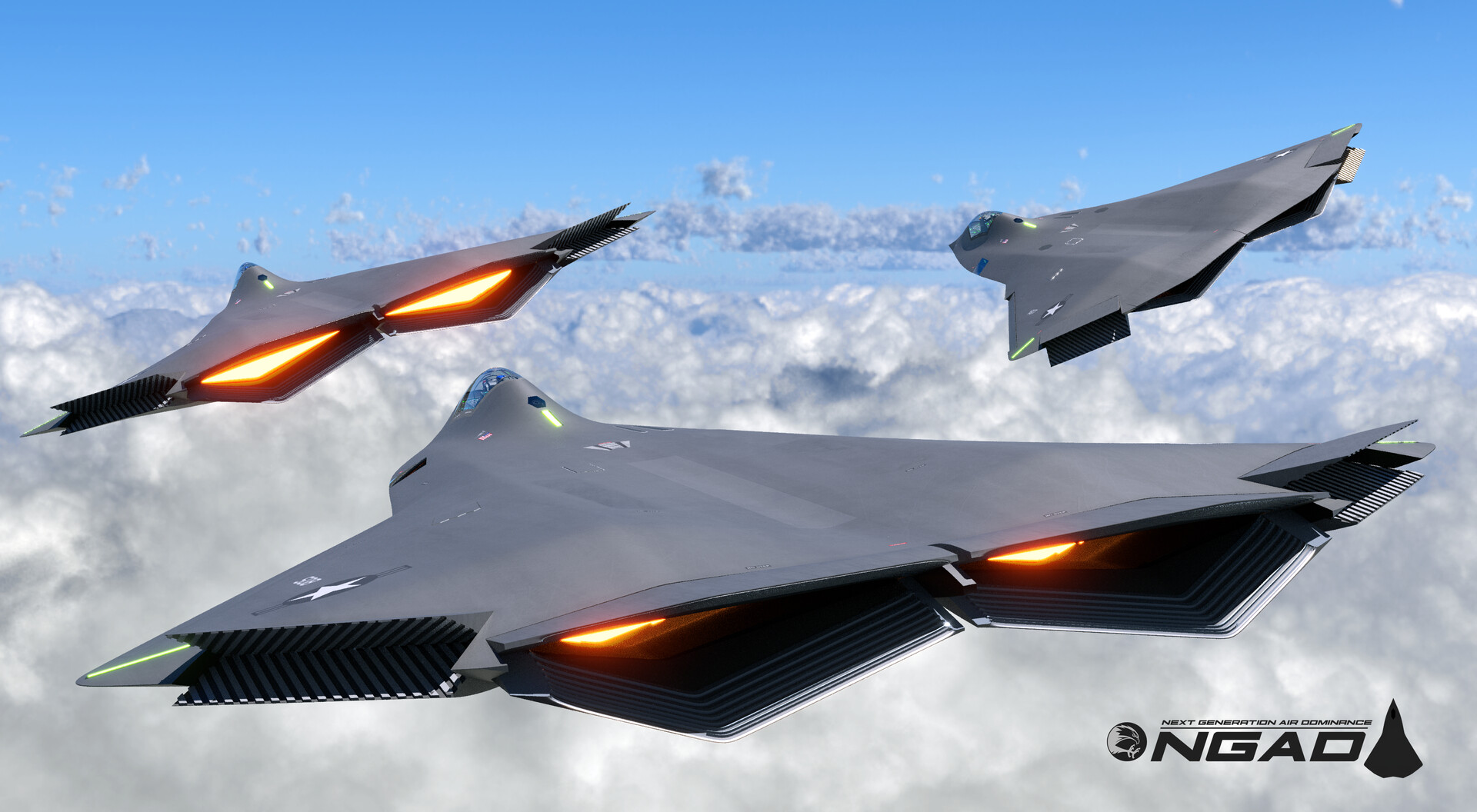
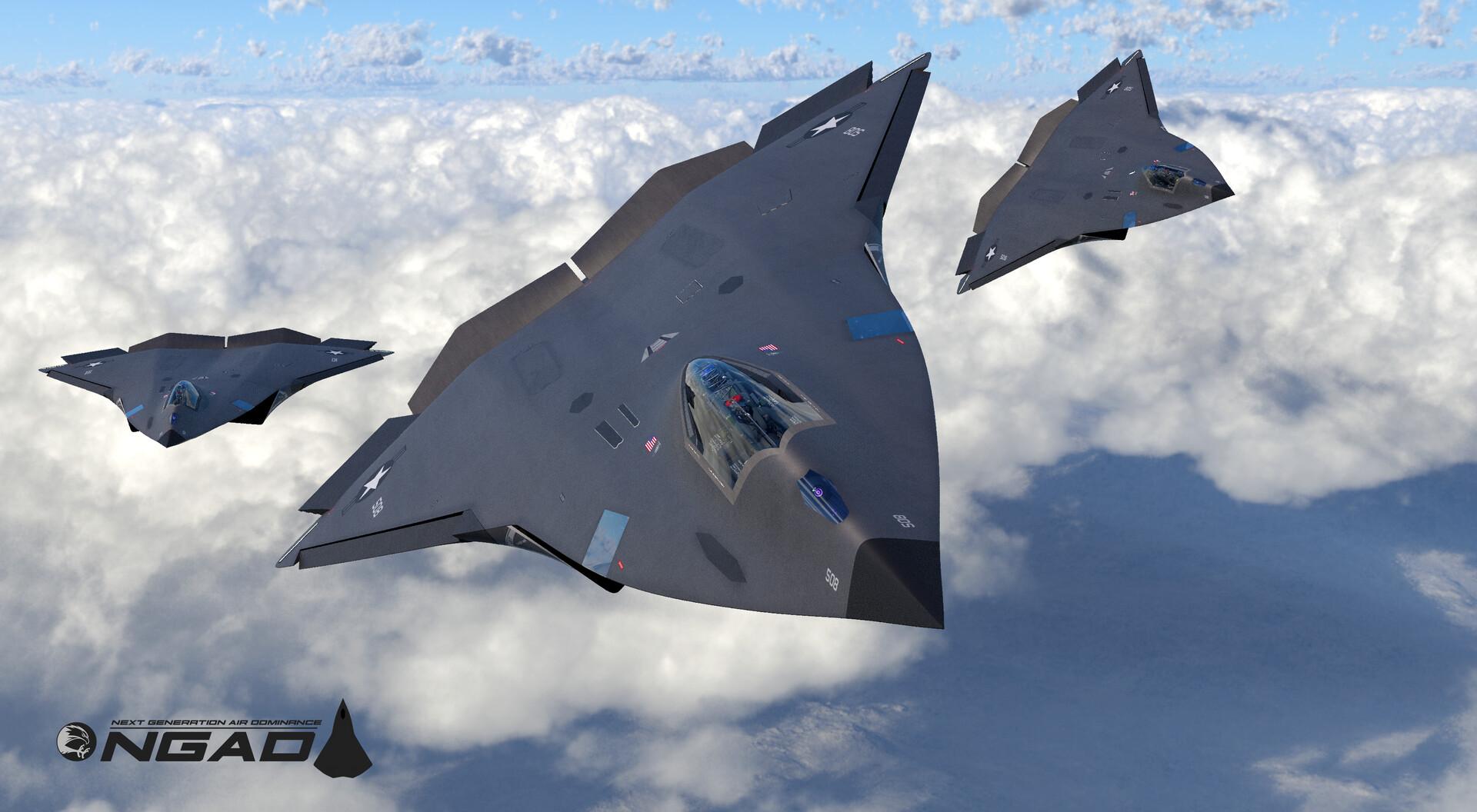
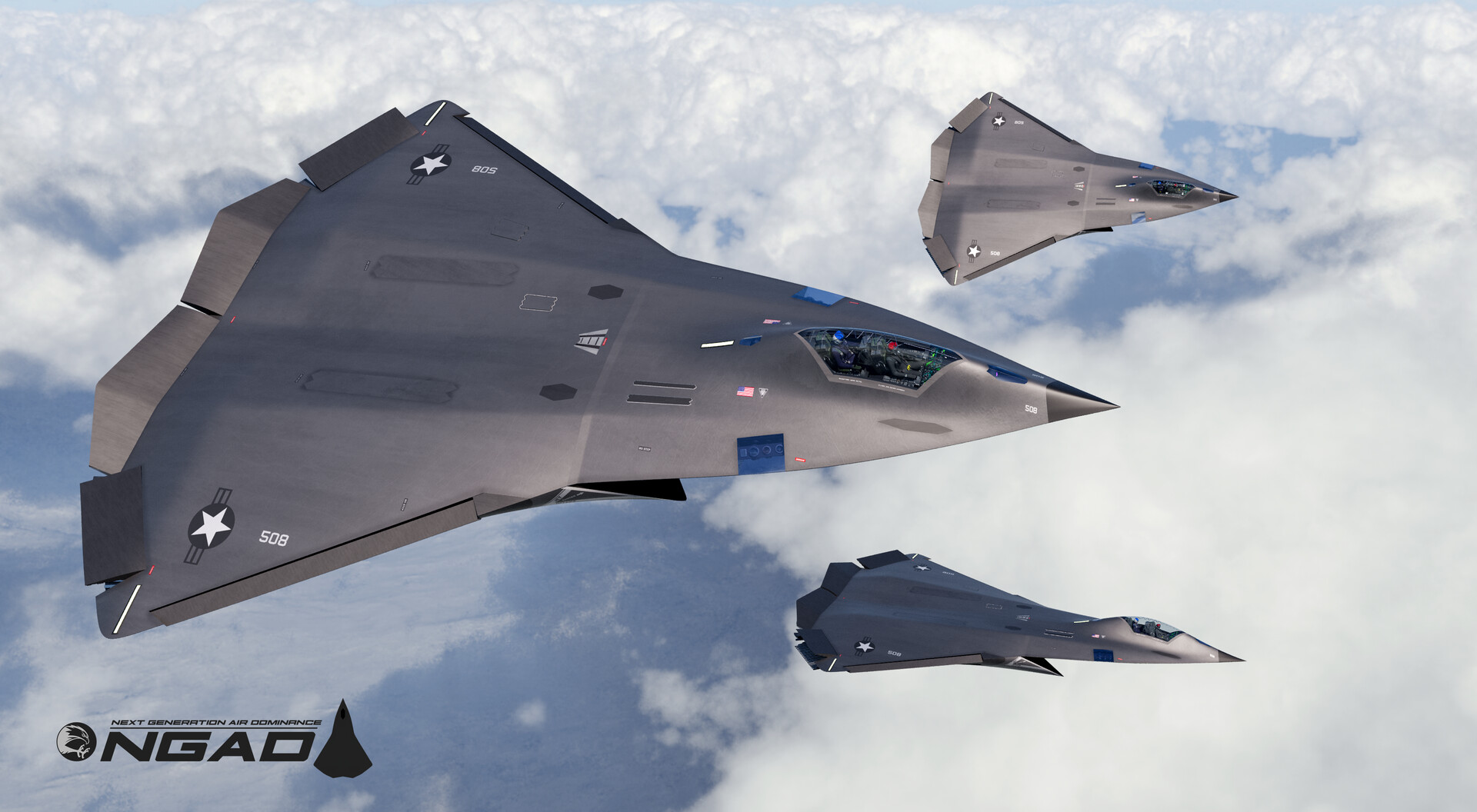
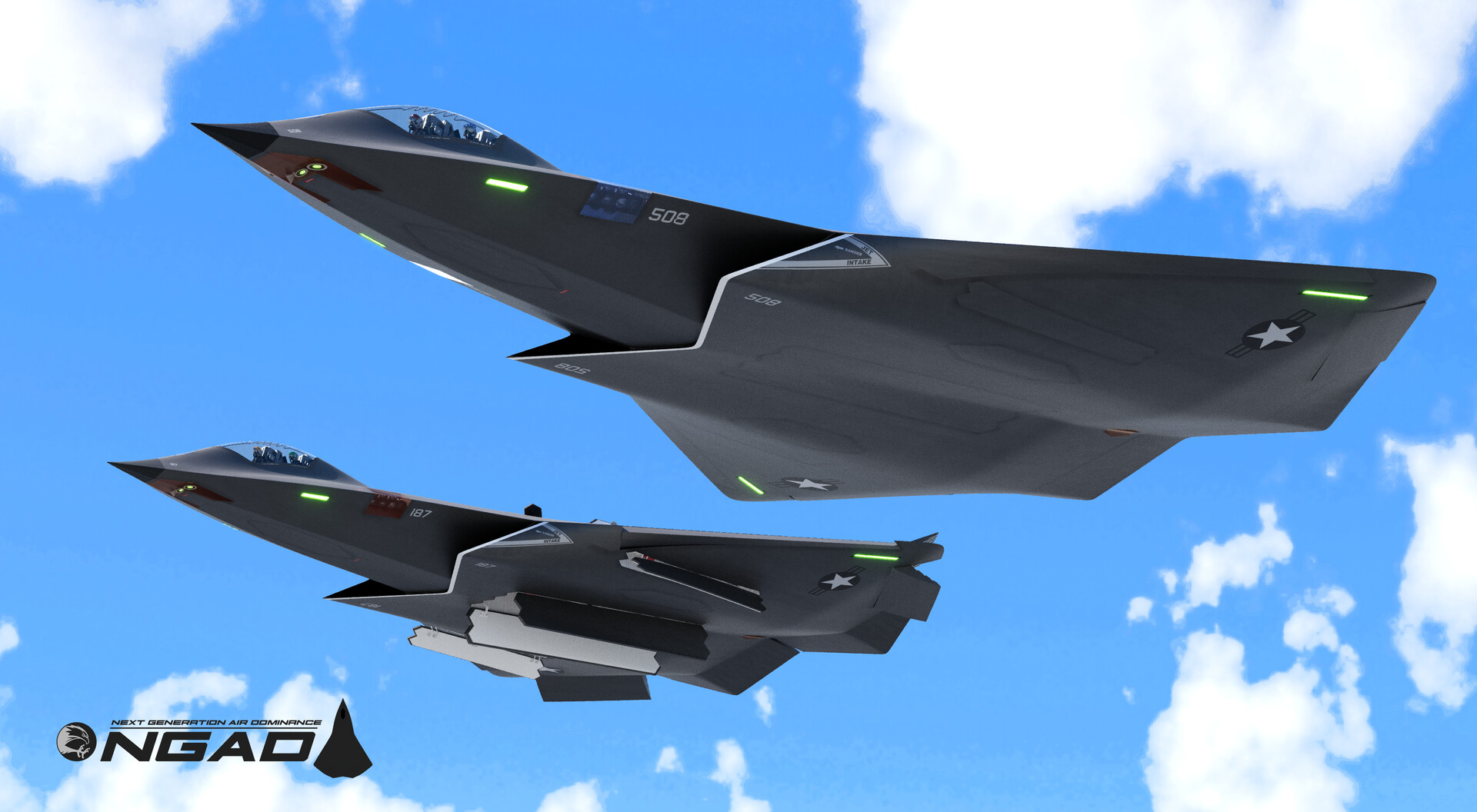
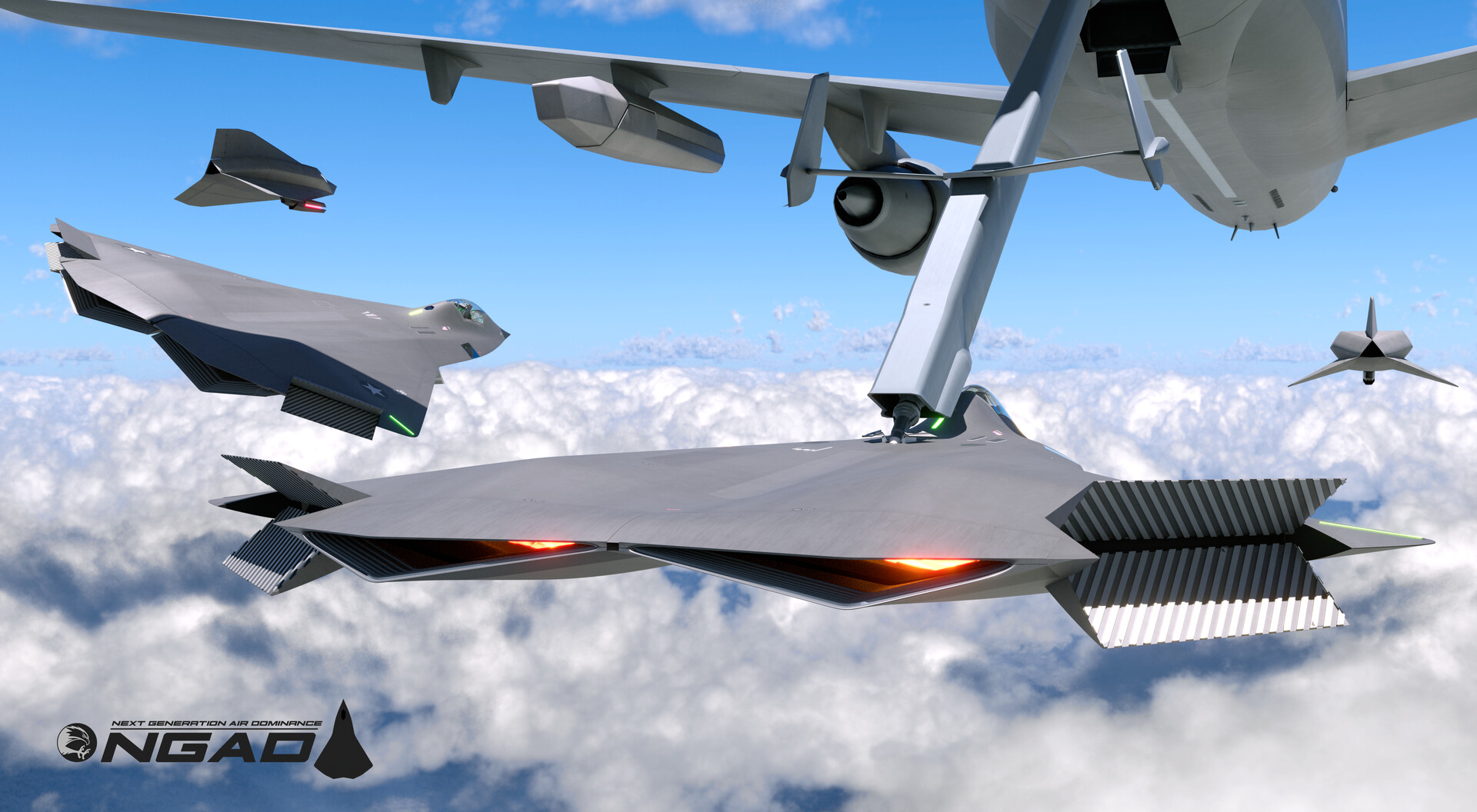
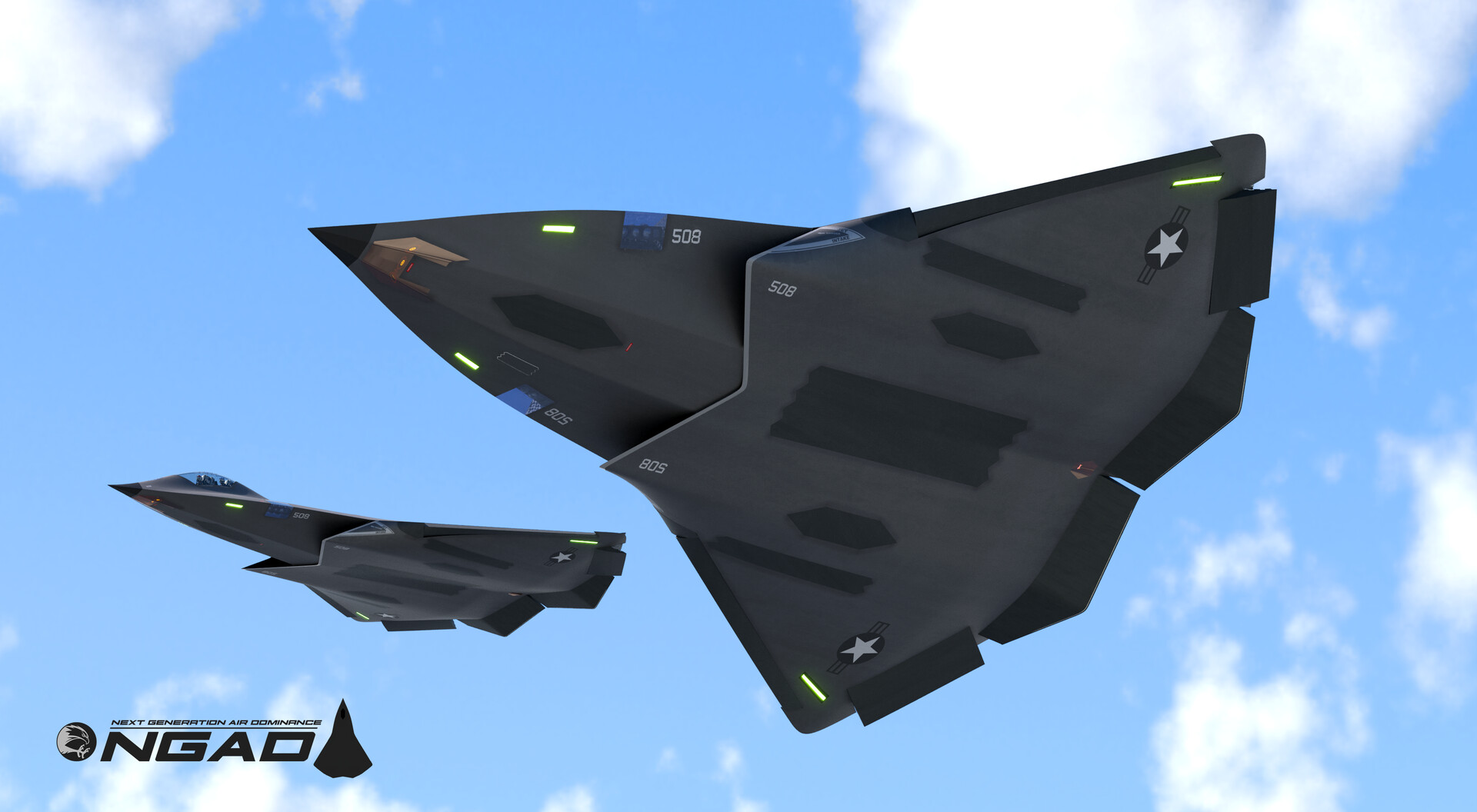
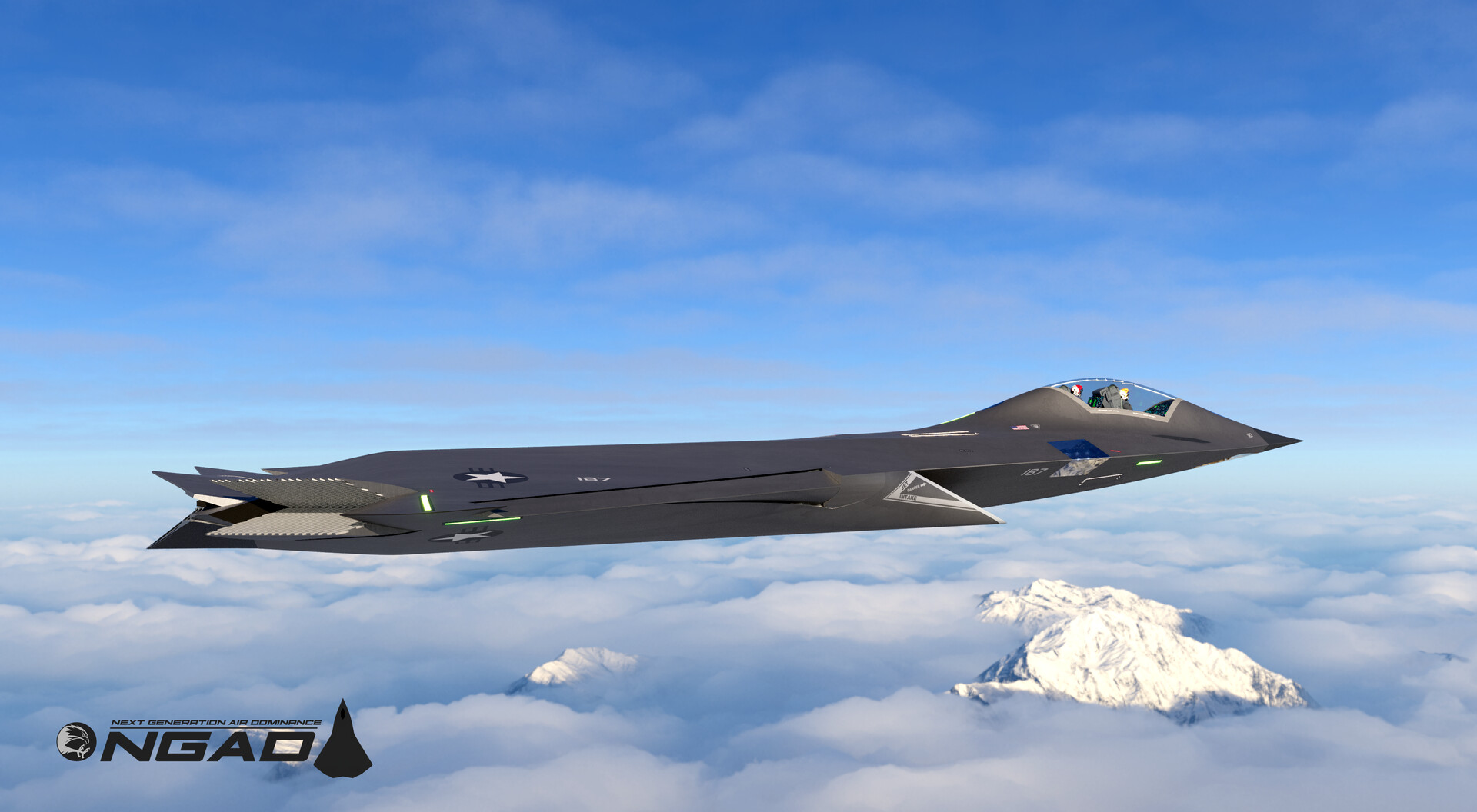
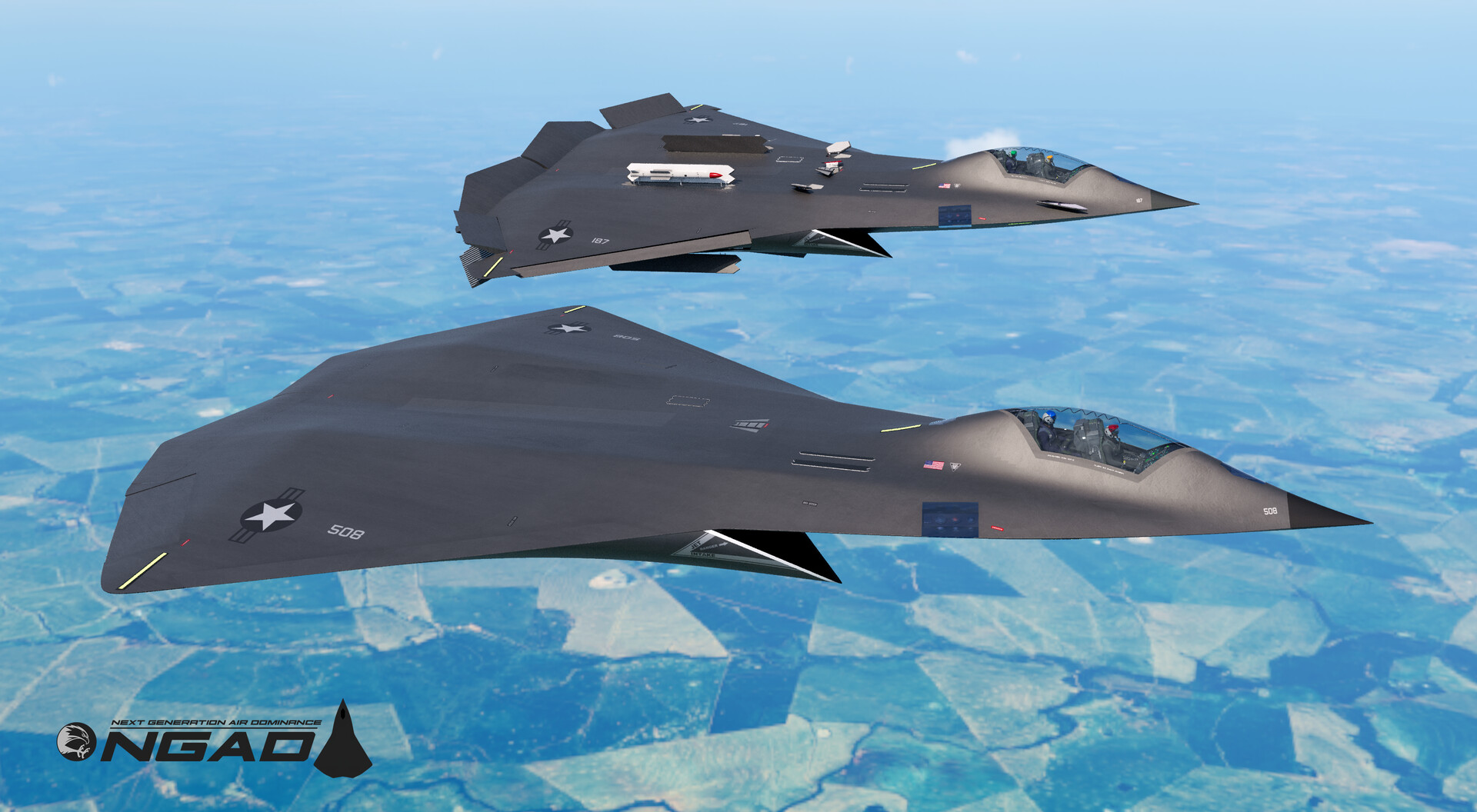
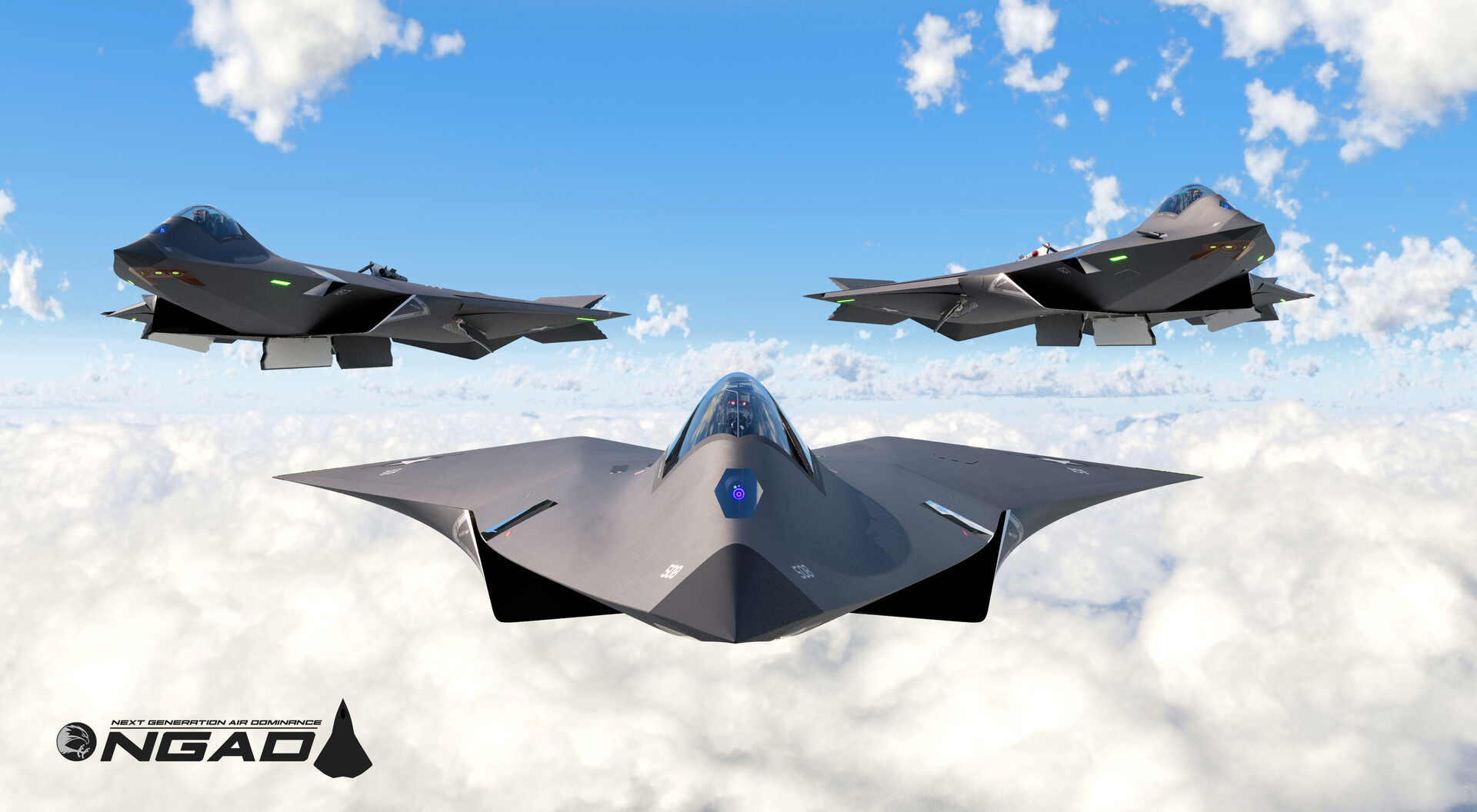
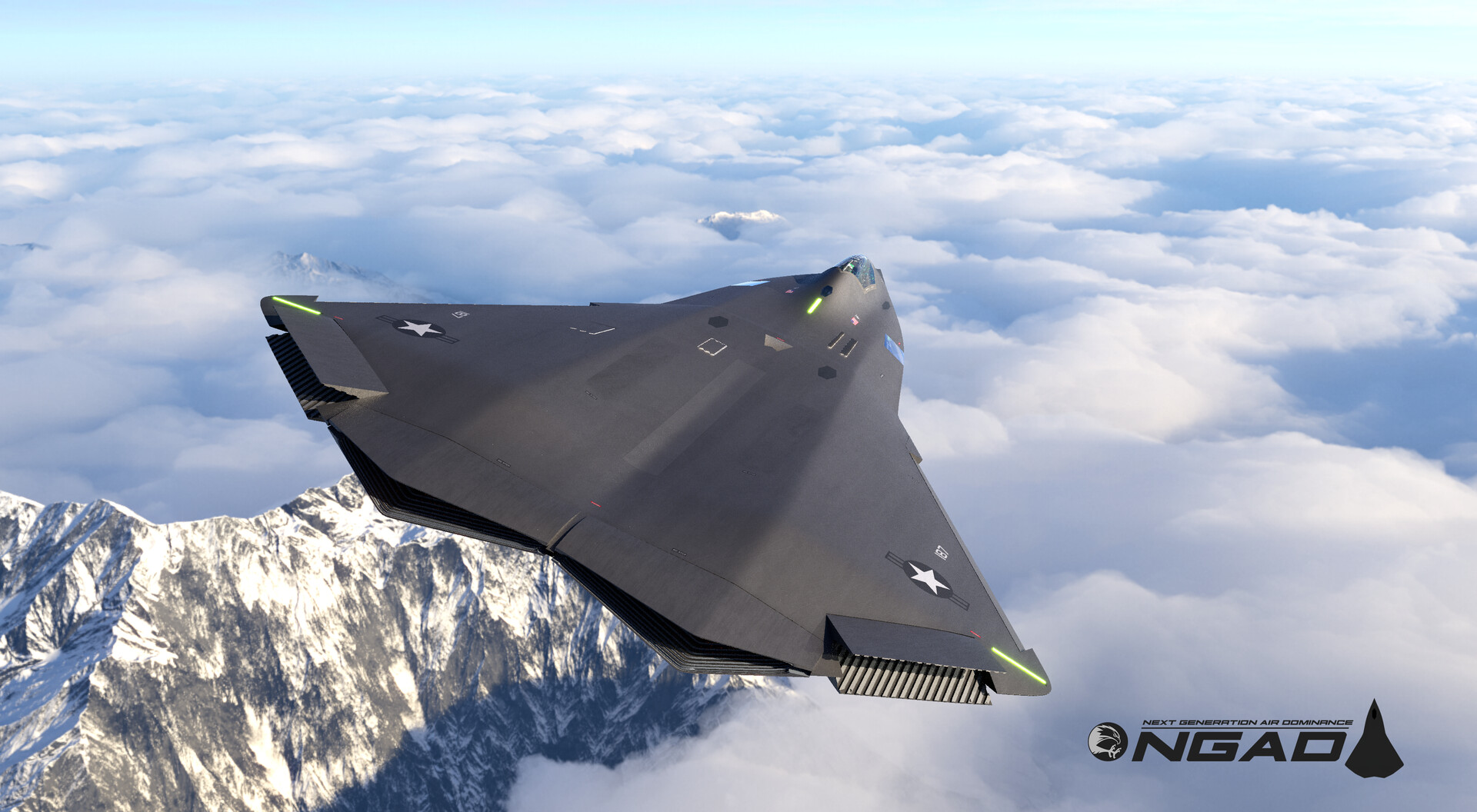
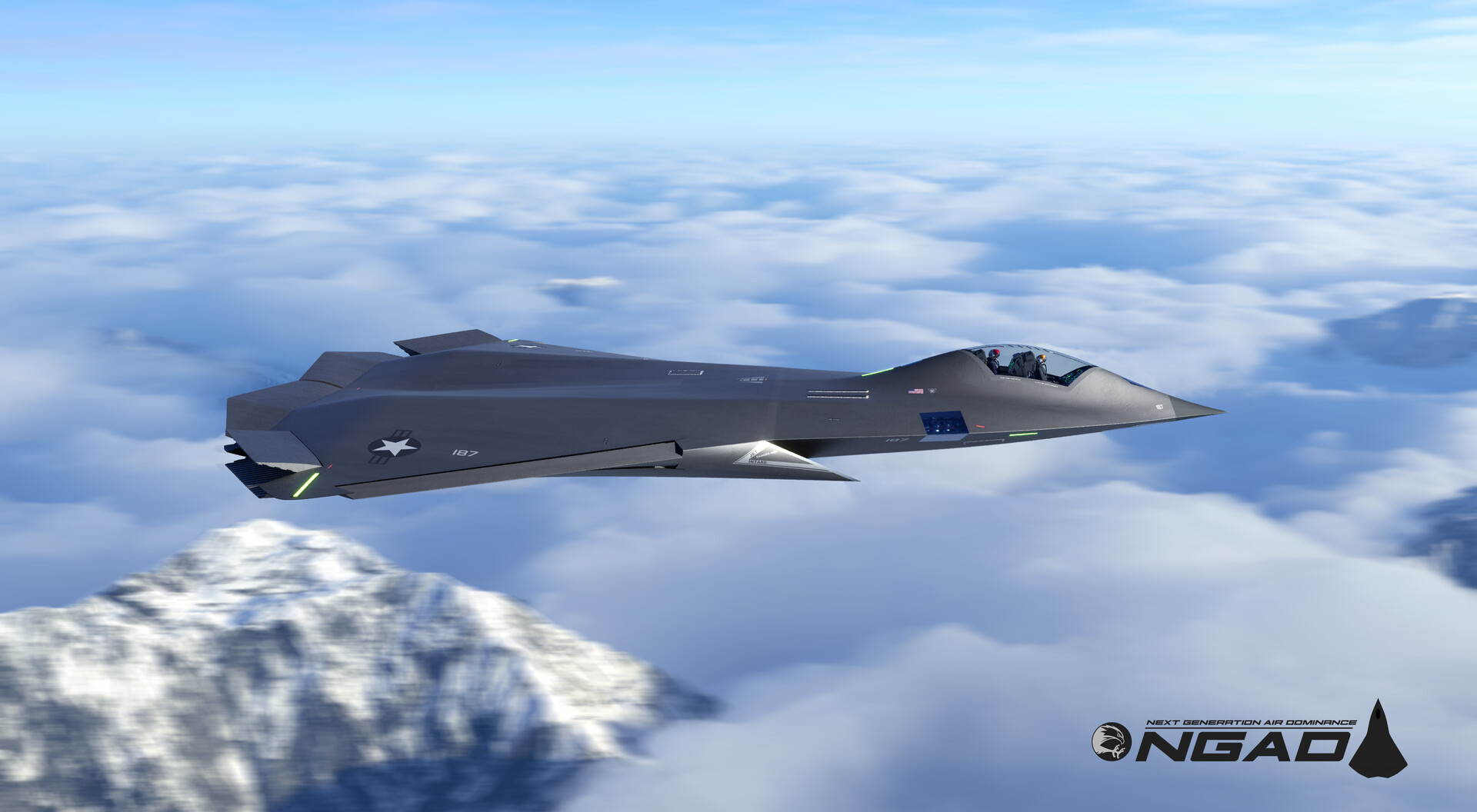
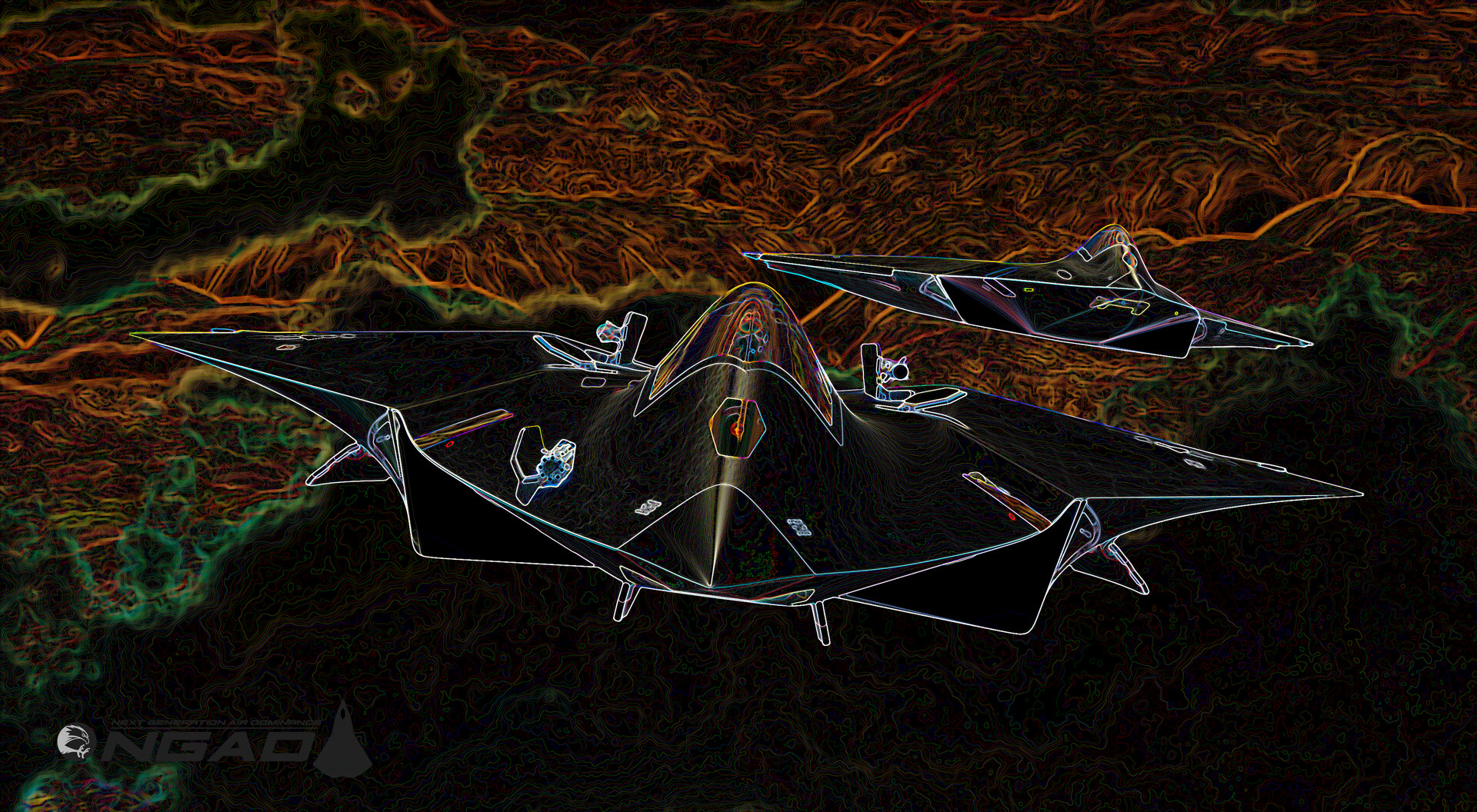
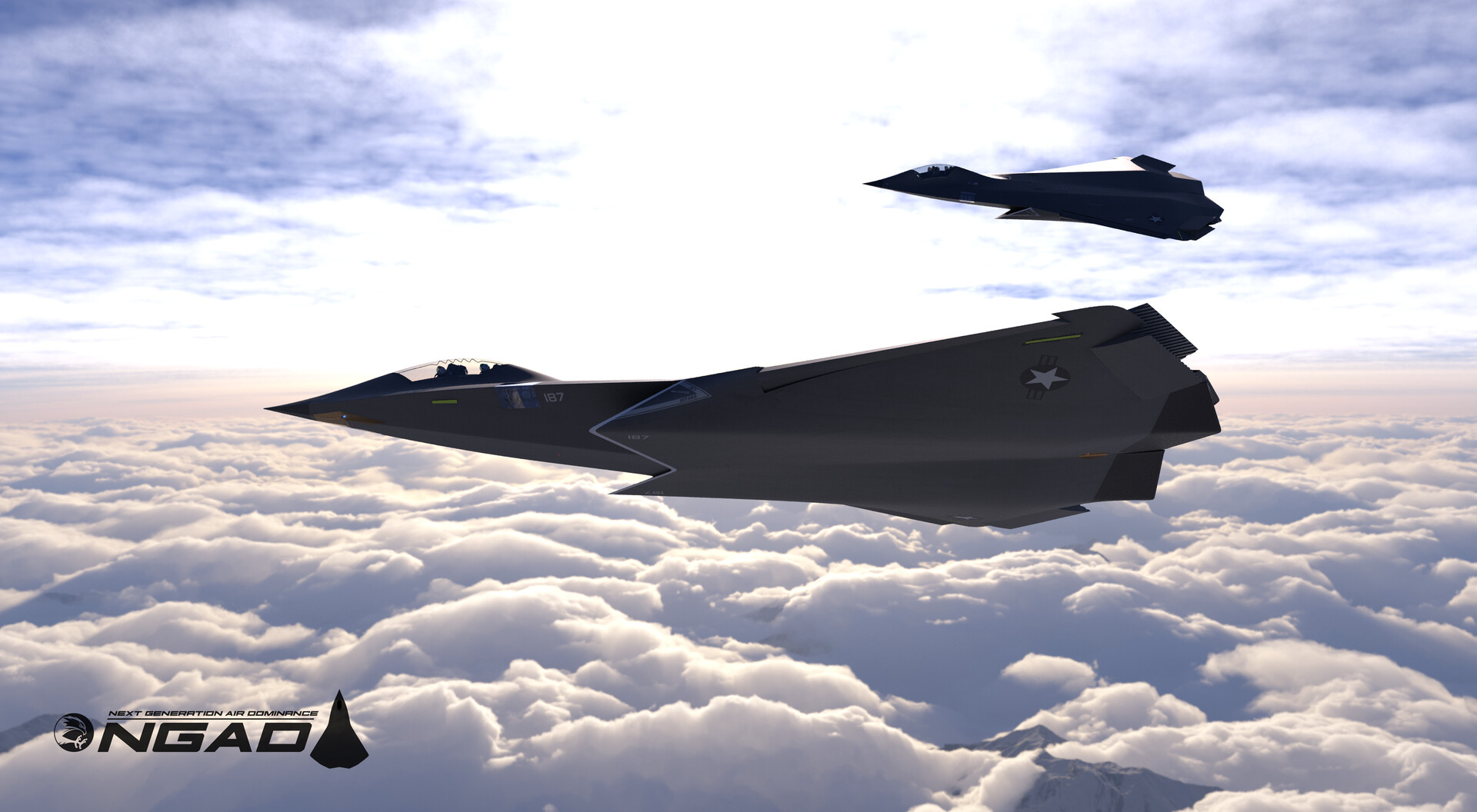
My vision for the NGAD (The Next Generation Air Dominance Fighter)
- Twin engined variable cycle engines.
- Two seater with WSO being the unmanned Flying Wingman operator.
- Side mounted IRTS and EOTS system with a vastly increased operating area.
- Front/rear mounted EOTS system with a wider spectrum due to shape and flush integration in fueselage.
- Innovating top mounted IR and Radar decoy launcher carrying small diameter missiles.
- B21 style leading-edge arrays AESA radar.
- Innovating stealth intake concept with priority for reducing the RCS from below.
- Innovative 2D thrust vectoring engine nossles for improved maneuverability.
- Innovative cooling system within the engine nossles.
- Top mounted missile bays for improved stealth missile launch.
- Mixed Delta/Flying wing concept a la B21 Raider.
- Innovating top mounted Chaff deployer.
- Interchangeble front mounted High energy laser system or Gun system.
The Next Generation Air Dominance (NGAD) is a U.S. Air Force initiative aimed at developing a new family of advanced air combat systems to maintain and enhance air superiority in future conflicts. It represents the next step in air combat, designed to outpace evolving threats such as advanced enemy fighter jets, surface-to-air missiles, and other air defense systems.
While much of the program is classified, several key goals and concepts have been publicly discussed:
1. Advanced Aircraft Development
NGAD is expected to include the development of a new generation of fighter aircraft, which could replace or complement existing platforms like the F-22 and F-35. The new aircraft will be designed to be more survivable, maneuverable, and capable of engaging advanced threats.
Stealth and Signature Reduction: NGAD aircraft will likely incorporate cutting-edge stealth technology and signature reduction methods to evade detection by enemy radars and sensors.
2. Autonomy and AI Integration
Unmanned Systems: There is a strong emphasis on integrating unmanned aircraft and autonomous systems, potentially including collaborative drone wings that work alongside manned fighters. These drones could handle dangerous missions or provide support in a more cost-effective manner.
AI-driven Decision Making: Advanced artificial intelligence could be integrated to aid pilots in decision-making, or even to control systems autonomously in certain situations, improving the aircraft's ability to respond to complex scenarios in real-time.
3. Networked Warfare
Connectivity and Integration: NGAD will likely focus on enhanced connectivity, enabling seamless communication between different air, space, and cyber domains. This means the NGAD fleet will be highly integrated into the broader joint force, operating alongside other military systems like satellites, ground forces, and cyber operations.
Sensor Fusion and Data Sharing: The aircraft would be equipped with a vast array of sensors, and their data would be shared in real time across the network, creating a comprehensive battlefield picture.
4. Hypersonic and Advanced Weapons
Next-Gen Weapons: NGAD will feature advanced weapons, potentially including hypersonic missiles, directed-energy weapons (like lasers), and advanced air-to-air and air-to-ground munitions. These new weapons will be crucial in countering next-gen adversaries who are also developing advanced capabilities.
Extended Range: The aircraft and weapons may feature extended range and capabilities, allowing them to operate in contested environments far from base, potentially across oceans or in high-threat areas.
5. Speed and Range
NGAD aircraft will likely be optimized for long-range missions with high-speed capabilities, potentially featuring faster-than-sound speeds or highly efficient propulsion systems.
6. Modular and Adaptable Systems
The NGAD program may pursue modular designs that allow the systems to be rapidly updated with new technologies as they become available. This would help ensure that the aircraft remain relevant and capable well into the future.
7. Collaboration and Partnerships
The U.S. Air Force is likely collaborating with various industry partners, including major defense contractors and tech companies, to rapidly develop these next-generation systems. Additionally, international partners could be involved, especially in areas like sensor technologies and networked operations.
8. Timeline and Implementation
The U.S. Air Force has indicated that NGAD will be a long-term project, with key developments expected over the next couple of decades. The first operational systems may begin entering service in the 2030s.
In summary, the NGAD initiative aims to secure the U.S. military’s dominance in air combat by fielding a new generation of advanced, flexible, and highly capable air platforms that incorporate cutting-edge technologies in areas such as stealth, autonomy, artificial intelligence, and advanced weaponry.