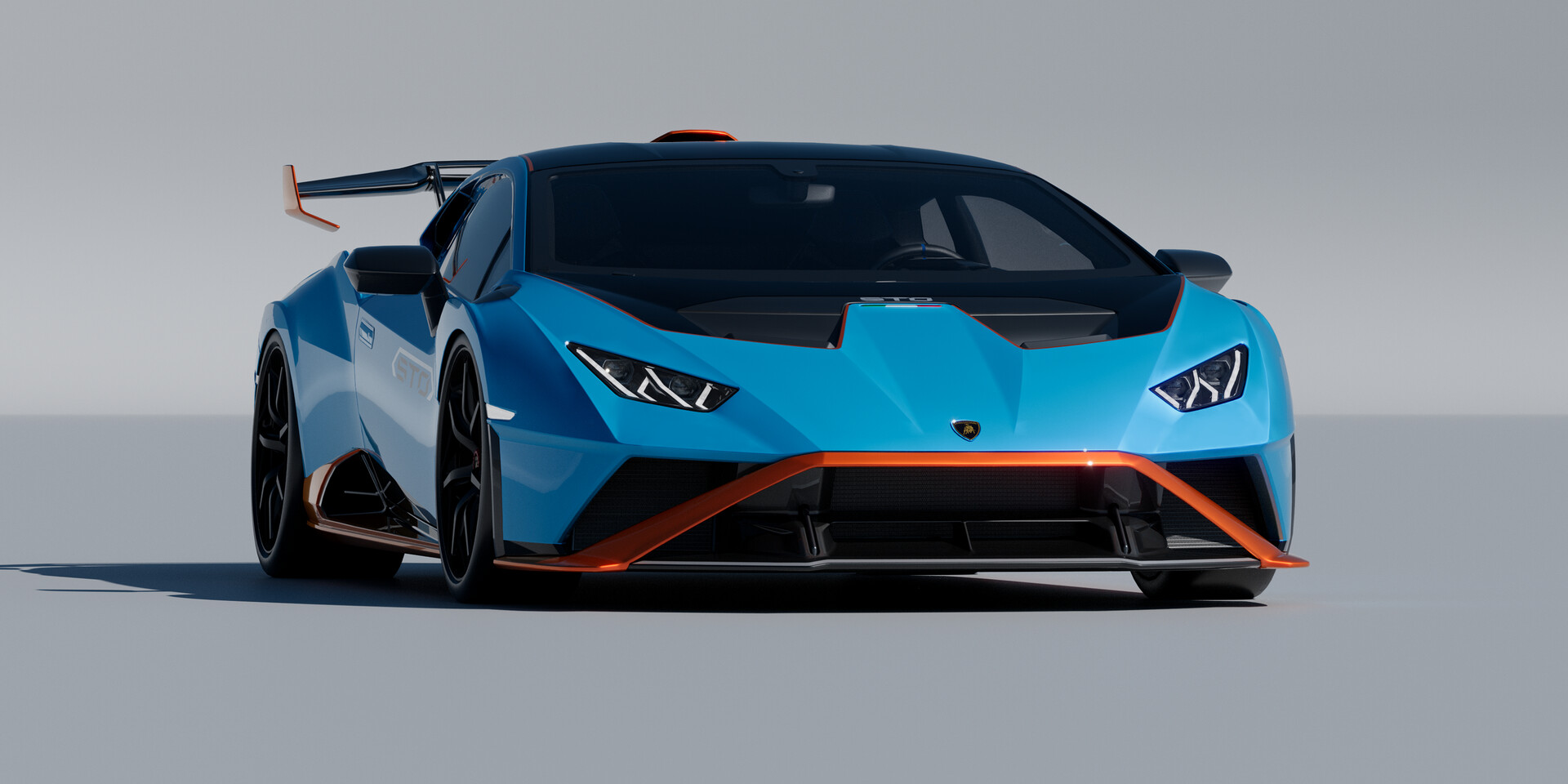
Lamborghini Huracan STO
A Lamborghini Huracán turned up to… well a good notch above the Performante. The new STO (Super Trofeo Omologata) claims to take the road-going Lambo experience a step closer to the Super Trofeo Evo one make racer and GT3 Evo cars. Lamborghini claims it’s the first car they’ve developed where track ability takes precedence over road driving. Pushed further than the Aventador SVJ even, in a bid to tackle rivals such as McLaren’s 620R or 765LT, the AMG GT Black Series and whatever Ferrari chooses to name the inevitable hardcore version of the 296GTB.
As far as numbers go, the STO’s engine struggles to hold its head up in that company. The 5.2-litre V10 is unmodified from the Performante, developing 631bhp and 416lb ft. But as ever, numbers tell little of the tale. The sheer ferocity and volume delivered by this 8,500rpm naturally aspirated motor make it feel even quicker than its claimed acceleration (0-62mph in 3.0secs, 124mph in 9.0).
The main mods over the Performante are the removal of the front driveshafts – the STO is purely rear-drive – the addition of rear-wheel steering, further weight saving and a lot of aero work. All told it’s 43kg lighter, which doesn’t sound that much. Apparently removing the front drive gubbins only saves 20kg, while 4WS adds 8kg back in. A thinner windscreen is 20 per cent lighter, there are magnesium wheels and carbon body panels that contribute to a 1,339kg dry weight. Light, but a 765LT has a dry weight of 1,229kg…
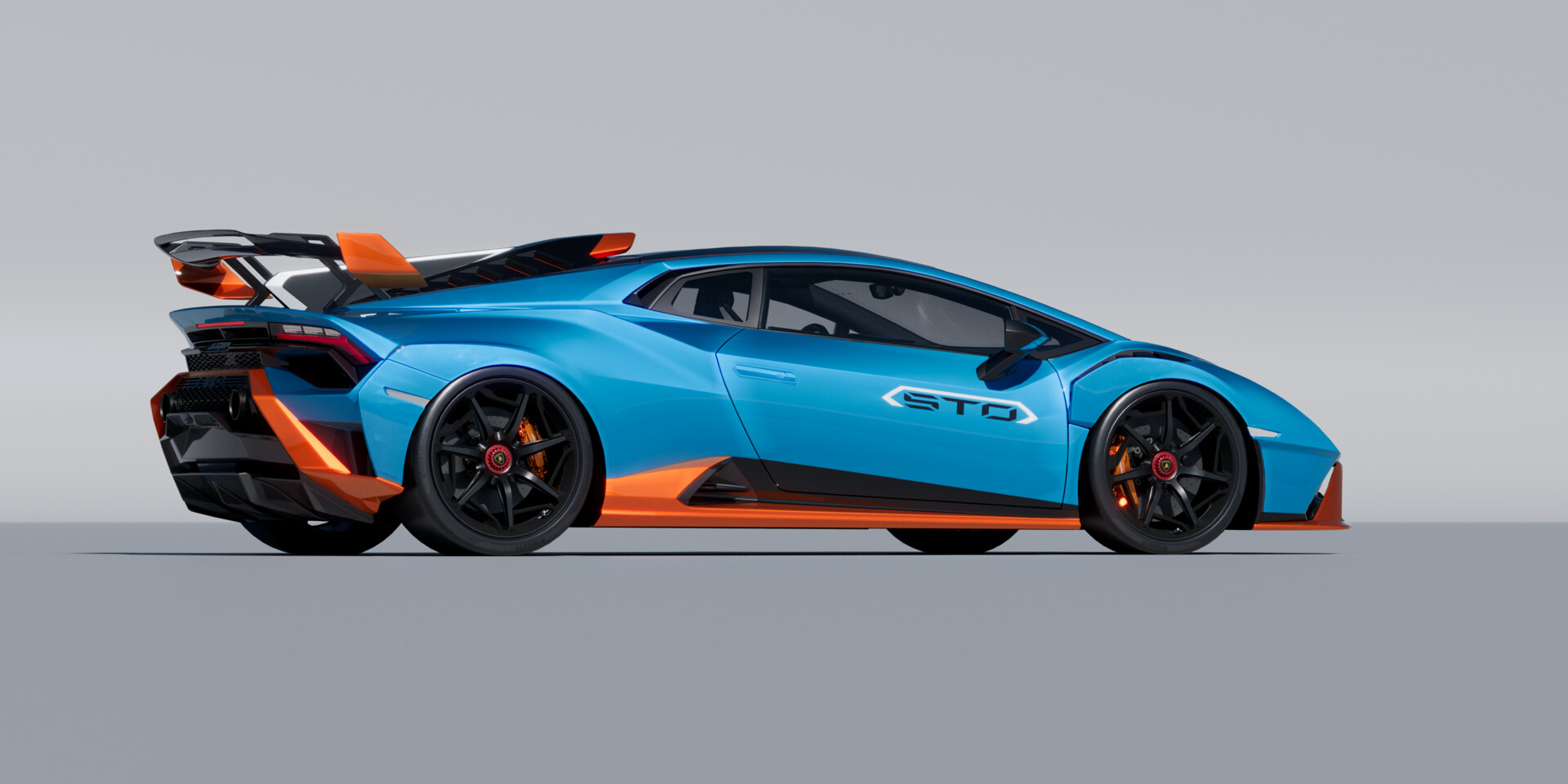
The aero, as you can see, has moved on more. And not subtly. Lambo says downforce is up 53 per cent compared to the Performante, which – some background reading suggests – developed 350kg at 186mph. Interestingly, Lambo has abandoned the ALA technology that ingested air at the base of the rear spoiler’s pillars and blew it out along the trailing edge. This is a simpler strategy: a manually adjustable, three position rear wing.
For starters, there are unusual fins down either side to help channel air towards it, plus the gaping roof duct which isn’t – as you’d assume – an intake for the engine. Instead it simply ducts cooling air down into the bay. Look closely at that and it’s gimmicky.
Everywhere you look there are ducts, slats, vents and channels. Underbonnet storage has shrunk to 38 litres (it’ll take a helmet) so radiator air can be expelled up the bonnet. That one-piece front panel (Cofango is Lambo’s name for it) is a pain to remove.
Elsewhere the tracks have been widened, there’s stiffer suspension bushes, new anti-roll bars and two-stage magnetic ride dampers. The brakes are Brembo’s CCM-R set up, claimed to give a 25 per cent power increase. Sharp at the top of their travel, the 390mm front and 360mm rear discs are fantastically effective and fade-free. A big step on from previous Lambos with carbon brakes, which tend to be dead underfoot with little initial bite. These are easy to modulate, but like to be worked hard.